Showing posts with label nature. Show all posts

Saturday, April 15, 2017

Montessori's Second Great Lesson: The Coming of the Earth


After the introduction of Montessori’s First Great Lesson: The Coming of the Universe, lower elementary children are eager to explore The Second Great Lesson: The Coming of the Earth. This study of the Earth begins, as the Universe study began, with cultural origin stories from around the world, as well as the evolving story of the scientists which involves facts, evidence, and the Scientific Method. It incorporates physics, chemistry, geology, and physical geography. Children learn about the conditions which existed that allowed land to solidify and water to form in the first place.


As in the Montessori 3-6 classroom, land and water forms are introduced in the 6-9 environment with greater detail and sophistication, and with different materials. In the 3-6 environment, children often pour water into shaped land forms to demonstrate land and water forms as opposites. For example, an island – which is land surrounded by water – is the opposite of a lake – which is water surrounded by land. This holds for the many other land and water forms studied in greater depth at the 6-9 level, such as isthmus and strait, cape and peninsula, etc.


Children are introduced to plate tectonics and discover how land forms (which we call continents) have been changing and moving on top of the crust of this planet for billions of years. This study helps us to discuss the eternal situation on this planet of climate change, which is affecting us as humans with great importance. Over the years, I have used various food items to demonstrate the three kinds of plate boundaries – transforming, convergent, and divergent. (This nomenclature also connects to terminology used in geometry lessons for some of the children, further deepening their neural pathways.) Whether I’ve used molasses, marshmallow fluff, or maple syrup with graham crackers, the learning environment smells sweet for several days. Children enjoy the texture of real materials as symbols of giant planetary processes.


The study of geology continues with the factors that allowed for plate tectonic activity – volcanoes and earthquakes. At the 6-9 level, children enjoy making their own exploding volcanoes (using baking soda, vinegar, and food coloring) and research famous eruptions to see how these natural disasters later affected animal and plant lives.


Long before the first life forms existed, rocks did, and children learn about the three main kinds: sedimentary, igneous, and metamorphic. Real examples of these rocks sit on our geology shelves waiting to be touched and understood. This photo shows an extension that involves creating a sedimentation jar, revealing the layers that these rocks make underneath our feet!


As with land and water forms, the continent puzzle map cabinet is introduced in Montessori 3-6 classrooms and used with more depth and detail at the 6-9 level. Children make their own maps of the continents, which provides both a direct aim (identifying land forms and water forms by name and shape) and many indirect aims: refining fine motor skill, connecting the child with places of relative distance, and conceptualizing the spiritual aspect of self in relation to land and water forms of such sizes and at such distances from one another.


The main purpose of the continent puzzle maps is not that a child will memorize all of the names and locations of countries in Asia, but that s/he begins to grasp his/her smallness within the infinite Universe, in terms of space, size, and time. Children often share the labor of this work with a friend and ask the other to hand him/her a certain country so that it may be traced, then labeled, then colored, then brought home to wallpaper one’s bedroom.


Finally, children continue learning about the Work of Wind and the Work of Water by studying the atmosphere, erosion, and weather. A fun way to explore these topics is to learn how to discriminate visually between different kinds of clouds, their shapes, and their meanings when seen above us. Some clouds portend rainy weather, others clear skies, and still others tell us humans on the ground what speed and motion the wind is taking 25,000 feet up in the sky. These photos demonstrate secondary extensions children make after first studying the three- or four-part cloud card materials. 


These hands-on activities both serve the multiple intelligences of different kinds of learners and ingrain the geographical concepts so that (just as with rocks and land and water forms) children make connections in nature or on trips with their families, as well as within a learning environment inside a building. After learning these initial concepts with the concrete Montessori materials, any location transforms into a classroom of the mind!

Friday, May 6, 2016

Vitamin N

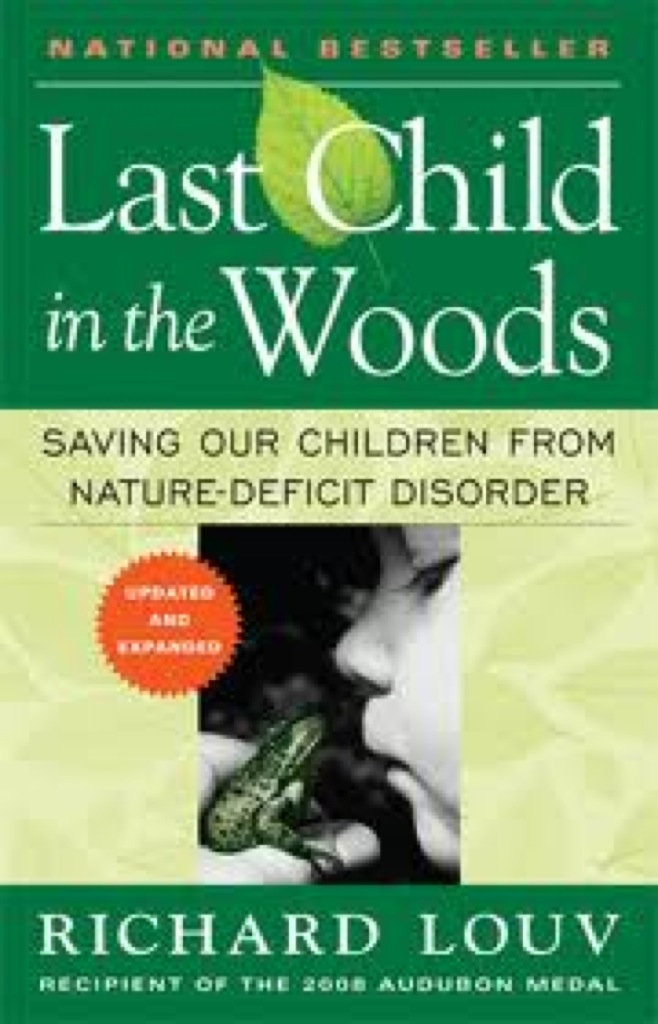
Recently, Richard Louv has written some of the most important books for parents and educators about the link between self-regulation, happiness, and success (in a holistic sense) and nature for children: Last Child in the Woods -- Saving Our Children from Nature Deficit Disorder, The Nature Principle, and his newest (released in April 2016) Vitamin N. Vitamin N is Nature, the ingredient so crucial for children to become competent, independent, and self-realized beings by integrating their physical, spiritual, emotional, and social needs in an environment where they are free of interference from adults.


I cherish and feel grateful for the existence of a natural space not one mile from our school where my students and I venture several times per year -- at least once per season -- to develop Vitamin N and nurture our spirits. We do this through free play in the forest environment, constructing (and often deconstructing) a fort made from a fallen tree. In this same area, past classes of mine have also learned about the necessity of the canopy -- the mixed age trees which mirror the mixed-age Montessori classroom -- for the survival of all biological life in the woods. Like the forest, we need all of our skills and difficulties in order to be the dynamic class that we are.


Each child receives her own tree under which she can see the world existing in its own rhythm and growing at its own pace, just as children do.


Students take their journals to a space that belongs only to one child at a time -- the nearest being ten to twenty feet away -- and soak in the environment through writing and art, sometimes using dirt or leaves to color their drawings. They write about what comes to mind about the natural world, and how the world entered their senses.


They touch nature, and by doing so, they return to themselves. This is what Maria Montessori envisioned with her Erdkinder program, and it is also how we maintain an authentic and impactful Montessori education. Louv cites Martha Farrell Erickson -- developmental psychologist and author of Together in Nature: Shared Nature Experience as a Pathway to Strong Family Bonds -- who advises parents and children to unplug from technology to create "an opportunity for ... affective sharing" to impact a child's lifelong development. Children need nature and a nurturing connection to their loved ones more than they need social isolation via electronic devices.

Here is a brief sampling of ideas for how to increase your child's intake of Vitamin N (Nature):
  • Put nature on the calendar -- just as you would schedule vacations or sporting events.
  • Think of nature as enrichment time -- not just after school classes, music lessons, and summer camp.
  • Turn your commute into a nature safari -- play I Spy with cloud formations, trees, and wildlife. Read signposts for land, water, and sky. Better yet, walk to school once per week, if you live close enough.
  • Play hooky -- take a day off work and let your teacher know you and your child will spend the day in the natural world re-connecting. Your child might take photos to share with classmates upon her return!
  • Stash a G.O. (Go Outside) bag in your car -- with compass, binoculars, water bottle, and hiking shoes -- so your family can be spontaneous and Go Outside at a moment's notice.
  • Recognize that boredom isn't a negative -- a child remembers best the unexpected adventure of the natural world.
  • Be the guide on the side -- ask questions of your child to elicit her logic and imagination, and resist the adult desire to control by answering these questions. This empowers your child and models curiosity over expertise.
  • Stay up late on Friday and Saturday night, and study the constellations. Your child may already know the ancient stories in the stars.
  • Paint with mud or leaves.
  • Press flowers between the pages of a heavy coffee table book you rarely open, using wax paper to protect your book.
  • Build a rock cairn.
  • Let kids take appropriate risks (walking on logs, for example) to build confidence, gross motor control, and resilience.

Friday, February 21, 2014

Spiritual Awakening in Nature


At my school, we are very fortunate to be within walking distance of a local park and natural area. Within twenty minutes, we can walk together through residential neighborhoods to a public space that has nature trails, playground, a forest (where students have planted young evergreens to help develop the canopy), and a large grassy area.


Students can connect with their primal instincts in the wooded area, building forts or playing with sticks. We also enjoy hiking deep into the nature trails to find a quiet spot for each child to sit, observe, reflect, and write in his/her journal about what it feels like to be alone in nature. This experience is spiritually uplifting for young children, whose lives may be very structured.
Richard Louv has written extensively about “nature deficit disorder” – the myriad ways in which modern children enjoy increasingly less time outdoors, engaged in “free play” of their own devising. These images capture the necessity of such time better than I could ever describe!

Mind Webs and “Going Out”


Last fall, we began our school year with our first field trip to Magnuson Park in Seattle, the grounds of which were once an airfield – now a sanctuary for wetland wildlife and birds of prey. Maria Montessori advocated students “going out” of the familiar classroom atmosphere and experiencing the natural environment as observers. As a scientist, Montessori understood the value of approaching the world around us as explorers, uncovering knowledge with our senses.
With the help of three Magnuson Park docents, our class of twenty students broke into sub-groups to dissect owl pellets; to explore Nature’s Grocery Store on a short circuitous walking path through overgrowth; and to create their own nests using the same materials the local avian population uses. Children enhanced their fine motor skills with tools such as tweezers – pulling tiny rodent jaws from feathers and hair in the pellets. They employed their five senses as they imagined themselves searching for edibles in the environment and planning a soft bed for their eggs.
Upon returning to school from this wonderful expedition, we met altogether at Literacy Group to make a collective mind web. Graphic organizers (such as mind webs, charts, and graphs) honor visual and spatial learners, who may prefer to draw their thoughts and move in a non-linear fashion to express themselves. As an educator, I facilitated this Literacy Group by using a few simple materials: a large (three by three foot) swath of black butcher paper, white chalk, and a small pad of post-it notes. 
First, I drew a spider web with chalk on the black background. Then, I asked students to remember any details from the field trip to Magnuson Park and modeled writing these memories on the post-its. The reason I did this in a whole group setting was to reinforce auditory, visual, and graphic learning styles. Some students remembered things right away, while others offered their observations later, after hearing their peers’ perspectives. Very quickly, we had about forty post-it notes covering our web.
The second step was to group these recollections into categories. One of the benefits of using post-it notes (rather than simply writing a list on a board) was that students saw how ideas can move around in different formations. A few categories students identified were:
  • things about birds
  • what happened on the way to and from the field trip
  •  facts about animals
  • facts about Magnuson Park
  • sounds and smells
We ended our Literacy group with students working as partners to make their own mini-Mind Webs with black construction paper, chalk pastels, and post-it notes. They chose which categories they wanted to remember most and went into more detail. This is an example of how classroom studies and “going out” activities are integrated in the Montessori environment. Recent brain research describes how the act of recalling a learning experience embeds the acquired knowledge by stimulating the frontal lobe, where working memory and the faculty for organization reside!

Sunday, May 6, 2012

Nourishing the Intellect in Nature


On a recent field trip to Full Circle Farm in Carnation, Washington, my class of 6-9-year-olds had a special experience in nature. Throughout the month of September, we had been studying the changing seasons, sketching farm animals, reading books about food, and had even taken our families to a local farmer's market to see the produce up-close. On our field trip -- which was free -- we wore mud boots so we could get dirty and explored the farm with a volunteer guide. We examined various seeds that are stored in the barn and smelled various geraniums with amazing perfumes (lemon balm, pepper, tomato) in the greenhouse where seeds flourish into plants. We also visited the manure-to-compost heap, saw the vintage farm equipment this local farm buys used as a form of recycling, and snacked on carrots from the field and blueberries off the vine. Although this farm is within thirty minutes of our school, this event was many students' first foray onto a farm where organic food is grown in a sustainable way.
I was reminded of Richard Louv's term "nature-deficit disorder". Children at first felt inhibited to splash in puddles, wary of dirtying their clothes, and they learned that some bacteria (among the oldest and earliest forms of life on the planet) are actually good for you, that they fight sickness created by "bad" bacteria. A parent mentioned that her child is reading voraciously this year, since television viewing was decreased. So many things that impact all of our lives end up seeming very simple. The more in-touch we are with hands-on materials, the more focus, concentration, and enjoyment we experience. Technology has much to offer us, yet we benefit from maintaining equal time with low-mechanized or even manual processes: peeling a potato, holding a door for another person, or turning a page.
In Richard Louv's two books on the subject of nature-deficit disorder, Last Child in the Woods and The Nature Principle, the author does not oppose technology yet reminds readers that the more technology we introduce and use in our lives, the more nature we need to bring about balance. Even a small amount of time outdoors positively affects children whose connection to the environment has been negatively impacted by increasingly sedentary or (conversely) over-structured lifestyles.
Fundamental aspects of Montessori education parallel recent scientific studies on the optimal ways we learn: 
  • through hands-on contact with natural materials
  • by going out into the world to freely experience (not simply research)
  • in communion with others
  • through noticing inter-connections between all life forms
  • in honoring our whole selves -- intellect, emotions, body, sense of wonder, need for company
  • and by finding peace at our own pace. 
Here are some suggestions for restoring a child's connection to nature:
  • Walking, journaling, and engaging in imaginative play outdoors -- with or without others -- may bring a child inner peace and joy or provide centering instead of over-stimulation.
  • Those who are naturally creative and imaginative may enjoy sketching or watercolor, which also strengthen fine motor skills.
  • Climbing trees, building forts, or relays may allow a child to develop unknown sources of physical strength.
  • Those who grapple with hypersensitivity or defensiveness may benefit from spending more time outside in order to release frustrations and find peace when compromise is necessary.
  • Time spent with friends and loved ones in nature settings may help a child feel more secure, allow him/her to take risks and try new things, and develop courage and confidence.
  • Many active children find that running or jumping rope helps them corral their energy and focus better indoors, as well as provides them with a break between periods of deep concentration.
  • Shy or reticent children may benefit from oral storytelling which inspires the senses and stimulates conversation.
  • Gardening may help children connect to others and the natural world, refine their auditory and visual senses, and enhance observance of their surroundings.
  • Collective excursions  -- especially hiking, camping, or adventuring -- allow children to express themselves more openly to others, build self-esteem, and hone gross motor coordination.
Quality time spent with one another, rather than distracted by convenience and electronics, brings us closer and helps us feel that we belong. In PE activities, we sometimes use a colorful parachute to encourage community-building. Other times, we walk a fabric labyrinth to experience focus, patience, and mindfulness while also practicing gross motor balance. We should always go out into nature, not only during "good weather". We learn so much from returning to the same places throughout the year, noticing seasonal changes, and appreciating the cycle of life.

Honoring the Spiritual Aspect of the 6-9 Child

Maria Montessori's most revolutionary act as a scientist and educator was her reverence for the child. Unlike other educational models, which consider children as a product of distributed information, Montessori education considers each student as an individual learner whose spirit is unique, whose time has value, and whose skills are informed by experience. Montessori education is special, because it allows the child to determine his/her learning from an abundance of experiences. Montessori described the spiritual aspect of a child as a “psychological attitude to himself and his life, within the environment, with others, how his personality is shaped by experience, and how experience leads to changes within himself.” Montessori schools honor the spiritual lives of children by giving them the world.
Spiritually, the 6-9 child is reflective and imaginative, experiences empathy and compassion, and is gradually becoming aware of the enormous world we live in.  Montessori noted, "All things are part of the universe and are connected with each other to form one whole unity. This idea helps the mind of the child to become fixed, to stop wandering in an aimless quest for knowledge." The Great Lessons begin from the largest concept and zoom in toward humankind, the world's youngest life form. As Montessori said, "work normalizes the child" through purposeful activity, in a calm atmosphere, within a prepared environment, and using hands-on materials. Care for the environment allows a child to make discoveries about the world, share thoughts and feelings with peers, and become a balanced, peaceful person. School is a place for learning not simply about the function of language and math operations, but about social conventions, communication, and caring for others in a community. Students love learning in a Montessori classroom, because it is a place that values their input.

One of the physical components of a Montessori classroom -- the prepared environment -- exists mainly to assist the spiritual life of the child. Montessori observed, "The more the capacity to concentrate is developed, the more often profound tranquility in work is achieved and the clearer will be the manifestation of discipline within the child." Materials are placed in an orderly and sequential manner on shelves within the child's reach so that he/she may freely select and manipulate works in zoology or geometry, word study or geography. The classroom is beautiful and simple, and the child works where he/she desires -- on a rug, at a table, in a rocking chair -- with ultimate control over a preferred mode of learning. The Montessori elementary classroom is rarely silent yet hums like a beehive, students respecting one another's work without disrupting the flow of a concentrating mind. 

The 6-9 child is growing increasingly independent, taking satisfaction in determining choices, and beginning to understand his/her place in the world. The child's soul has awoken to issues of justice, equality, and liberty. Matters of everyday life begin to resemble those of history and society, since the child sees the classroom as it is: a microcosm of the larger world. Learning experiences that encourage belonging and caring for the world reinforce a child's joy at the beauty of life. Montessori noted that, "If a person were to grow up with a healthy soul, enjoying the full development of a strong character and a clear intellect, they could not endure to uphold two kinds of justice—the one protecting life and the other destroying it. Nor would they consent to cultivate in their heart both love and hate." Montessori education seeks to give the child a sense of self-determination so that he/she may find peaceful solutions to conflicts. 

One of the core components of Montessori learning is going out, specifically into nature, to see the world both as a whole and in its parts. Montessori noted about the child that, "The things he sees are not just remembered; they form a part of his soul." The importance of children connecting their senses to the natural world cannot be overstated, especially when media has become an increasingly large part of family lives. Montessori children learn about the parts of a plant not simply through using wooden puzzles, tracing the segments, and labeling the names, but by going out into the habitat classroom, weeding in a garden, and walking to a nearby forest with his/her classmates. Recent scientific studies by the National Wildlife Federation suggest that going out into nature calms a child's stress level, increases fitness, reduces symptoms of ADHD, increases critical thinking skills, diminishes anxiety and depression due to over-structure and lack of free time, and enhances social interactions. The NWF also asserts that children now spend less than one hour per week in nature, as opposed to thirty hours per week indoors, sedentary, and viewing media. Montessori education allows for freedom of movement and incorporates nature in the daily classroom.

Traditional education pretends to know the capacity of children and constructs a system in which students perform in order to prove their merit. Maria Montessori declared that “education becomes a matter of helping the precious energies that manifest themselves with irrepressible force, for the soul is not a stone for sculpting according to the artist’s talent but is free energy whose expression and unfolding obeys its own inner laws”. Over a century ago, Montessori demanded that "education should no longer be mostly imparting of knowledge but must take a new path, seeking the release of human potentialities." Montessori education adapts to and honors all aspects of the child. Maria Montessori understood the spiritual life of the child, whom she described as "an enigma. There is in the soul of a child an impenetrable secret that is gradually revealed as it develops." The child is the keeper of the secret, and contact with the natural world gives the child a safe place to share that secret, thereby releasing the power of the child's energy into our collective future.